There are different ways of making a wine sweet. The simplest sweet wines are made so by adding what is in effect unfermented grape juice. The greatest, most complex wines use other methods. The most famous is picking grapes when they are affected with noble rot (botrytis cinerea), a mould which causes the grapes to shrivel, concentrating the sugar levels in the juice. Noble rot is behind the sweet wines of Sauternes, Germany (for Trockenbeerenauslese), and Tokaj in Hungary. Other methods can be used, as outlined below, to create truly extraordinary wines.
Rutherglen
Hot, inland Rutherglen has been producing some of the greatest and most memorable sweet wines since the nineteenth century. These wines are so sweet, the Australians have an apt name for them: "stickies." There are two styles of Rutherglen, Muscat and Topaque (which used to be called Tokay, but the name was changed for legal reasons). The former, made from a dark-skinned version of Muscat à Petits Grains Blancs, can be aged for years and released very old (sometimes a century later); the latter is generally younger and less complex, made from the Muscadelle grape. Both are made in similar ways, however, in a solera system in tin huts accumulating heat in Rutherglen's warm climate. Instead of killing the wines, as one would expect from such conditions, the heat adds complex oxidative aromas as it does in Madeira. The grapes are picked when turning into raisins, fortified during fermentation to maintain high sugar levels, before being aged in oak barrels. Although producers regulate themselves, there are four tiers for both Muscat and Topaque, rising in maturity and quality: standard, Classic, Grand, and Rare.
A pale amber colour, with lots of dried fruits - raisins, sultanas, figs - on the nose, and quite floral too - roses and honeysuckle (Muscadelle is an aromatic grape). There are also oxidative aromas of toffee, fudge, and caramel. The palate is quite spicy (peppercorn, juniper), which perhaps comes from the alcohol (17.5%). I can imagine this with sticky toffee pudding, one of my favourite desserts. ✪✪✪✪✪
Pedro Ximénez
As intense, dense, and sweet as the wines of Rutherglen are, those made from the white Pedro Ximénez grape are even more so. Although most of the wines are produced in the sherry region, the majority of the grapes come from neighbouring Montilla-Moriles where it's drier and disease-prone Pedro Ximénez escapes rot. After the grapes are picked, they are laid out in the sun to dry and turn into raisins. The sugar is so concentrated that the juice can only be fermented to around 5%, before being fortified and aged in a solera system. The wines are a dark brown, sometimes mahogany colour, and are intensely sweet, as much as 450g/l of residual sugar. They are so sweet that they can be difficult to drink on their own but make the ideal accompaniment to the sweetest of desserts. There is nothing more indulgent than pouring a PX - as the wines are usually abbreviated to - over vanilla ice cream.
Gonzalez Byass Nectar NV ($30; 750ml)
A characteristically brown colour, with a deceptively restrained nose that slowly opens up to a wonderful array of dried fruits - figs and prunes and blueberries - cloves and anise, coffee, leather, and tobacco, and oxidative aromas of toffee and caramel. The wine is intensely sweet, at 370g/l of residual sugar; the sweetness is intensified further by a low acidity (sherry is one of the few wines that can get away with low acidity because of the viscous acetaldehyde). The alcohol is relatively low at 15%, which lightens the wine a little. Those complex aromas from the nose are matched on the palate, with some ginger, nutmeg, and cinnamon to add. A complex, expressive wine that's as good as PX gets. ✪✪✪✪✪✪✪
Eiswein
Yet another way of making a wine sweet requires a great deal of labour and dedication. For an Eiswein (Icewine in English), the grapes are left on the vine into the cold winter until they are frozen. They have to remain healthy and the varieties used must be ones with such a naturally high acidity they will retain it until November or December. The grapes are generally picked in the dead of night when temperatures are -8˚C or below. To ensure the grapes don't thaw, they are often pressed on site before returning to the winery. When pressed, all the water in the grapes is frozen and the juice which comes out is a sugary syrup, which leads to intensely sweet wines. This is a labour of love.
Rosenhof Orion Eiswein 2012 ($29; 350ml)

The grape most commonly associated with quality Eiswein, due to its aromatic complexity and high acidity, is Riesling. It was interesting, therefore, to taste two Eisweins made from varieties not usually associated with the style. The Orion is from Grüner Veltliner, Austria's signature white grape and which is high in acidity. It has a
rich, honeyed nose, with cooked apricots and peaches, honeysuckle, orange blossom, and orange rind, with white pepper - characteristically associated with Grüner - and ginger notes on the palate. ✪✪✪✪✪ Even more unusually, the Austrian producer also make an Eiswein from Blaufränkisch, a black grape. It looks, smells, and tastes like a high-quality sweet rosé: a vibrant, light, yet intense orange colour, with perfumed floral aromas of rose petals and violets and ripe
red fruit aromas of cranberries, pomegranates, strawberries, and raspberries. The acidity isn't quite as high as the Grüner, but nonetheless a refreshing, sweet wine.
✪✪✪✪ The Grüner I would enjoy with apple strudel, the Blaufränkisch with strawberry shortcake. Food is where sweet wines come into their own: they make desserts even better.

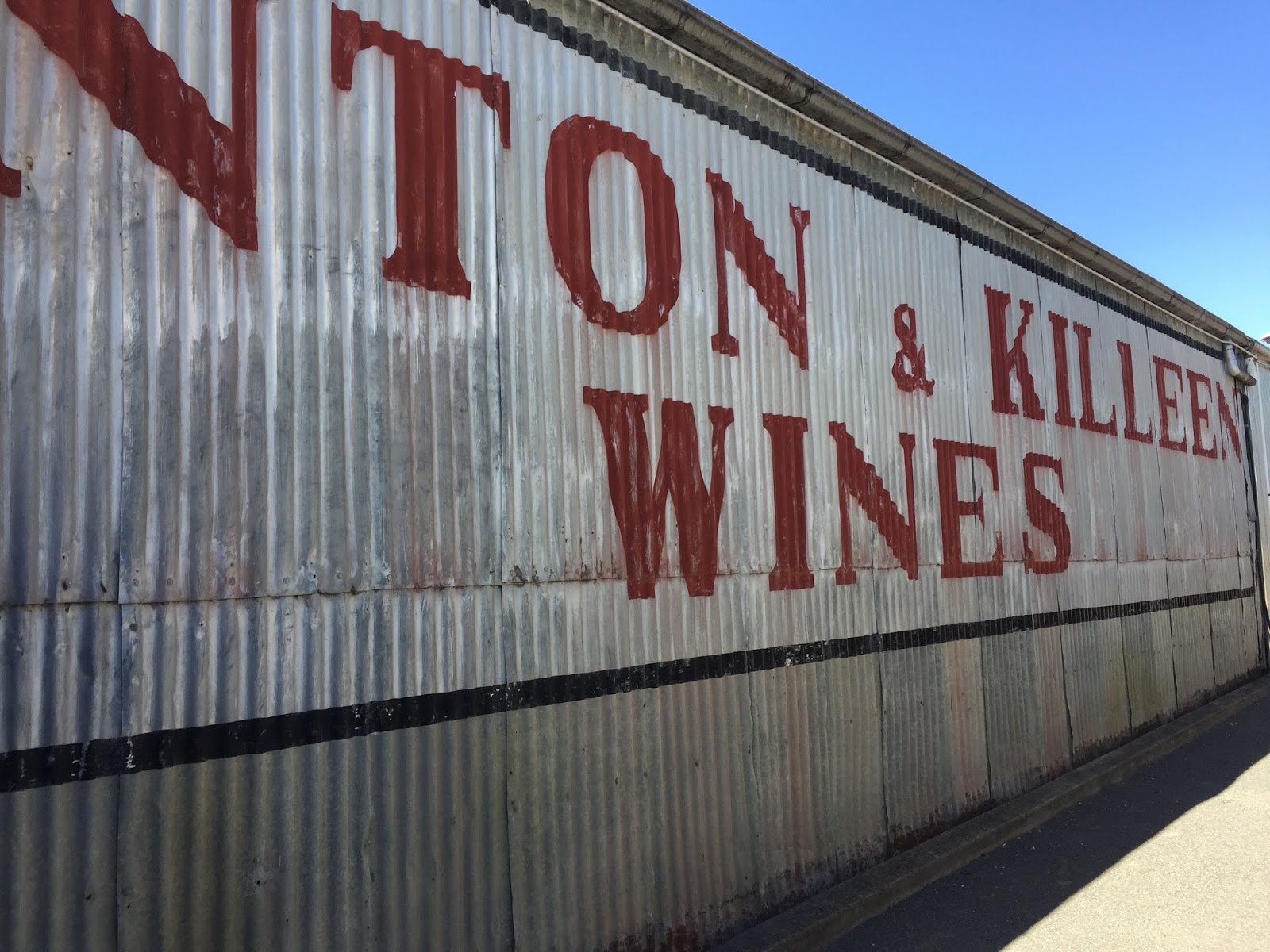 Visiting Rutherglen was on the must-do list for my trip to Australia, despite being over three hours from Melbourne and another six to Sydney. Once the centre of the Victoria wine industry, remote Rutherglen is now best known for its world-class fortified wines made from Muscadelle and Muscat. These are some of the most extraordinary wines in the world, intense, long-lived, and not quite like any other. I had to go there to see in person how these wines are made. Doing so gave me an even greater appreciation of the time and dedication required to make these wines.


