Showing posts with label victoria. Show all posts

Saturday, 4 February 2017

Rutherglen's Fortifed Wines

Visiting Rutherglen was on the must-do list for my trip to Australia, despite being over three hours from Melbourne and another six to Sydney. Once the centre of the Victoria wine industry, remote Rutherglen is now best known for its world-class fortified wines made from Muscadelle and Muscat. These are some of the most extraordinary wines in the world, intense, long-lived, and not quite like any other. I had to go there to see in person how these wines are made. Doing so gave me an even greater appreciation of the time and dedication required to make these wines.

Pfeiffer: on the site of an old distillery
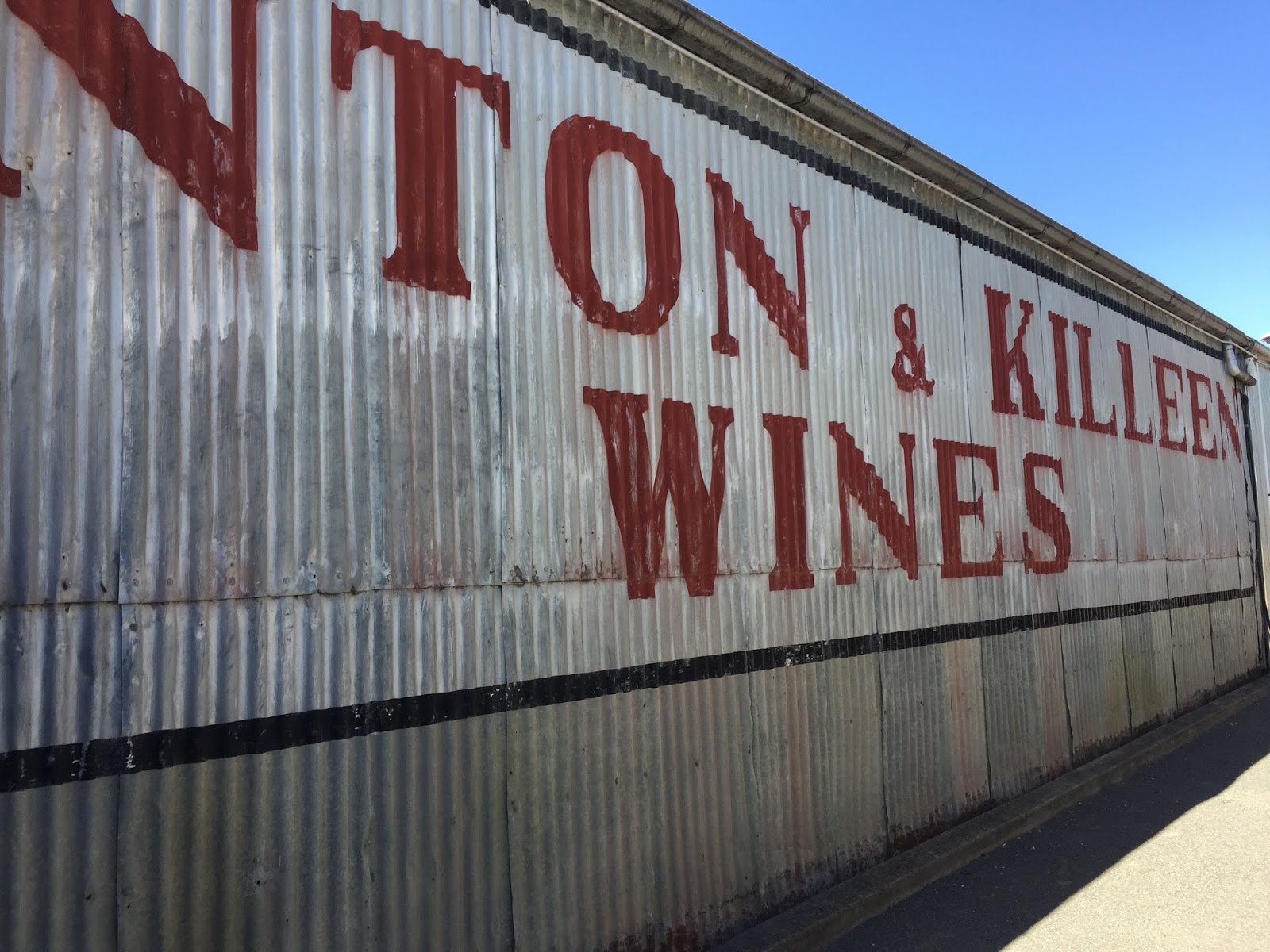
I visited two producers: Stanton & Killeen, who have been going for seven generations since 1875, and Pfeiffer, who are just on their second generation. History is important here, not least for the styles of wine produced. Fortified wine, here as elsewhere, is often a blend of different vintages going back decades and more. Chris Pfeiffer started with 400l of stock in the mid-1980s and now has 160,000l of wine that he has built up over the last thirty-five years - and he is one of the newer producers. Winemakers have to nurture these wines, passing them on for future generations, and ensuring that the wines produced reflect the past as well as today. This may seem a romantic notion - and it is such romance about fortified wines which appeals to me - but this is a practical, everyday concern which requires the investment of maintaining wines for decades, as well as blending them together to create a consistently high-quality wine. The production of table wine seems short and easy in comparison.

tawny 

I came for Muscat, tasted a lot of dry table wine, and came away with a new-found appreciation for Australian ‘port’. This term can no longer be used, but Australians have been making their own style of port for generations. Under pressure from the EU, they renamed it Tawny. This can be misleading as the wines are not always tawny in colour, but I think it's a good thing that Australians were forced to rename the wines as it emphasises how unique the Australian styles are. Tawny is very different from Portuguese fortified wines: depending on their age, the wines are intense, oxidised, often amber in colour, with lots of toffee and dried fruit aromas. They are made all over Australia, not just Rutherglen, and style varies according to producer. Outside Rutherglen, Yalumba's Tawny Museum Reserve, made from Grenache and other Rhône grapes, is a great entry into this style of wine. Within Rutherglen, Pfeiffer have just released their first Rare Tawny, with an average age of 25 years, which is an extraordinary example. Such a wine is best thought of in comparison to a Scotch whisky: the long barrel ageing, deliberate oxidation affecting the colour and aroma, and a leathery, nutty, sweet texture.

topaque 

intense tasting: young Topaque on the left, old on the right
This is another style that has undergone a forced name change, this time in response to the Hungarian wine industry. Australians traditionally called this style Tokay (pronounced toe-kay), which Hungary protested was too similar to Tokaji (toh-kai). Both styles are sweet, but other than that they have little in common. It's a great shame that the name was switched to Topaque, as this doesn't really evoke the aromatic, complex nature of the wines (not that Tokay did either). These wines are seriously underrated. Made from the Muscadelle grape, which produces erratic yields, the wines are unique, with cold tea and fish oil aromas. These may not seem pleasant attributes, but it's the best way to describe the tangy, viscous quality of the wines. The wines change a lot with age, fresh and aromatic when young, darker and more developed with age. These changes best evoke how wines develop in Rutherglen, as a young Topaque is hugely different from the oldest wines.

muscat 

solera style system
In an obscure category, Muscat is what Rutherglen is most famous for. Made from Brown Muscat (red-skinned strains of the Muscat variety), the wines maintain the floral, grapey aromatics even through the oldest wines which can be decades old. The wines are even stickier and sweeter than Topaque or Tawny; they also lack the tangy nature of Topaque and have lower acidity, instead being more robust and forward in their fruity aromas. In appearance, Muscat is at first darker than Topaque, though they share a similar, almost black colour when old. That colour comes from deliberate oxidation which takes place in cellars that aren't protected from the warm outside conditions. Such exposure to heat not only changes the colour, but adds nutty, toffee, caramel, dried fruit aromas. All of these wines are intense, sweet, and rich. The oldest wines are the most complex, but require little more than a glass before the syrupy sweetness overcomes the palate. Drink them with dessert (the older the style, the richer the dessert), smoke them with a cigar, or let the richness soak into the stomach after a heavy meal. These are food wines, and should be appreciated as such. Any restaurant, especially within Australia, that doesn't offer one of these wines as a digestif or as an accompaniment to dessert is falling short.

Monday, 30 January 2017

Victoria

If Australian wine began in South Australia, then Victoria is where it developed into a serious industry. The state dominated exports in the nineteenth century, mostly of fortified wine: remote Rutherglen accounted in the 1890s for a third of all exports. Unlike South Australia, Victoria was hit by phylloxera and it has been shaped by the changing fashions of the industry and consumers. The cooler regions were neglected for much of the twentieth century, as the taste for wine was for full-bodied, often fortified, styles. Now, it's a state that challenges perceptions of Australia as a uniformly warm climate and is at the vanguard of the emergence of quality Pinot Noir.

climate

Travelling through Victoria certainly shifted some of my own preconceptions, not least that Australia's climate is always easy to make wine in. Our day in Yarra Valley was spent sheltering from the persistent rain, with cool weather and clouds shadowing our weekend in Melbourne, whose climate is known as the least predictable of Australia's cities. The areas around Melbourne can in fact be cooler than Burgundy (though Burgundy summers are warmer than people often realise). The Southern Ocean brings in cool breezes from the south, and these can be reinforced by winds from the mountain ranges that surround Melbourne to the north and east. It must be noted that we've visited during a cool, wet summer, which has resulted in a growing season four weeks behind its usual schedule. Nevertheless, it's shown that Australia's climate is up-and-down and not always hot and sunny.

Yarra Yering, Yarra Valley

Pinot Noir

All this leads to the ability to produce quality Pinot Noir, not a grape Australia has been traditionally associated with. This production has been going back to the 1970s, but as Australian trends move towards lighter-bodied red wines the regions have recently been coming back into fashion. It's the area around Melbourne which is most known for Pinot Noir, and the two most popular regions are Yarra Valley to the north-east and Mornington Peninsula to the south-east. The latter is a short drive from the city and by the coast, so is extremely popular among city dwellers. Accordingly, the wines are expensive and in-demand.

Yarra Valley is not more than an hour's drive away, but feels more remote tucked away beneath the mountains. Yarra exudes confidence right now, its wines winning acclaim and fitting right in with current trends. Again, however, the climate is problematic: it can be cool, wet, and windy, yet it's also warm enough to get both Shiraz and Cabernet Sauvignon fully ripe, although these wines are quite restrained. Being able to grow all these grape varieties is due to location: lower Yarra is flatter, lower, and warmer, while upper Yarra is higher and cooler, producing the concentrated Pinot Noirs the region is famous for.

Joshua Cooper Pinot Noir, Macedon Ranges
Much less well known is Macedon Ranges, to the north-west of Melbourne. Growing conditions here are cool and difficult, restricting investment into the area. Pinot Noir is light, with delicate red fruit and pepper aromas, the most intense, restrained Pinots of the Melbourne area. As Australians look towards cooler climates, it will be interesting to see whether Macedon Ranges attracts more attention from both producers and consumers.

Kelvedon Estate Pinot Noir, Tasmania
We didn't get the chance to visit Tasmania, the small island south of Melbourne which was primarily used for blending in sparkling wines made in Victoria. Now it's getting the attention it deserves, due to the increased focus on cooler-climate wines such as Pinot Noir and Chardonnay. I only got the chance to try one Tasmanian Pinot Noir and it was actually fuller-bodied, riper, and deeper-coloured than any of the wines from Yarra, Mornington Peninsula, or Macedon Ranges. This once again points to the difficulty in defining Australia's climates. For such a small island, Tasmania is very diverse and produces a range of styles. The Pinot I tried, from Kelvedon Estate, was from the east of the island, which is warmer and drier than the regions around Melbourne (to the extent that Zinfandel used to be grown). In contrast, Pipers River to the north of the island is cooler and wetter. As Tasmanian grapes were traditionally for blending, there hasn't been a proper attempt to define the island's different climates and sub-regions. As the wines become more fashionable, this may have to happen.


North-East Victoria

One of the most historic parts of Victoria is not going to suddenly start producing such styles of Pinot. Inland Rutherglen has a warm, continental climate and is most famous for its fortified wines, which I will write about in my next blog post. Due to the sad decline in the popularity of fortified wine, in Australia as elsewhere, the region is trying to redefine itself through its table wines. These wines are full-bodied, intense, and bear a striking resemblance to those of south-west France, continental Spain, and Portugal. They are made from a range of varieties once planted for Australian port. The Portuguese varieties, especially Touriga Nacional, are perhaps the most interesting, capable of producing tannic yet floral wines. Also once planted for fortified wine is Shiraz, which here is more like the robust, tannic wines of the southern rather than the northern Rhône, and Durif. In California, Durif is called Petite Sirah. Like the Californians, the local winemakers are trying to tame this big, tannic, fruity, and deep-coloured wine. They have some way to go yet, but the full, chocolate, coffee aromas suit palates inclined to robust, aggressive wines.

Rutherglen is also near to the Australian Alps, part of the Great Dividing Range, where altitude significantly cools the climate. The town of Beechworth is known for being home to Giaconda, Australia's most expensive Chardonnay, and Hunter Valley producer Brokenwood are also making some good Chardonnays there. Nearby is King Valley, which I hadn't heard of before, but I tasted two Rieslings from the high-altitude region, both from Pfeiffer, a quality Rutherglen producer. The 2016 had pleasant lime, mineral aromas with a deceptively long finish. Owner Chris Pfeiffer was generous enough to open the same wine from 2005, which had developed intense petrol, stone aromas reminiscent of the best Riesling. The last thing I expected to taste in Rutherglen was ageworthy Riesling, which goes to show one should never know what to expect from Australia.

Saturday, 14 December 2013

An Aromatic Flight

Apart from simply writing about what I love thinking and talking about, one of the main reasons I started this blog was to record how I progress in the WSET Diploma which I begin in January, what I learn from it, and where it leads me.

One of the many daunting aspects of the Diploma is the blind tasting, where you are asked to provide detailed tasting notes on flights of wine, including spotting the identity of a wine and its age.

To help practise this technique, the WSET recommends a series of flights to taste, such as "Full-bodied spicy reds" (Shiraz, Zinfandel, Malbec) or "Old-World Oaked Whites" (Côte de Beaune, Rioja, Cru Classé Bordeaux). The only problem with this advice is that some of the flights suggested are quite expensive - "Gamey, Strawberry-ish reds" (Burgundy, Barolo, Rioja) - and you need like-minded people to share the wines with.

For this reason - and despite tasting lots of wine in the meantime - I had until now only gone through one of the recommended flights, "Syrah/Shiraz" (Northern Rhône, South-Eastern Australia, Barossa). Here, identifying the inexpensive wine was straightforward, but less so distinguishing between the French Syrah and Barossa Shiraz, showing just far from its stereotypes premium Australian Shiraz lies.

I finally rectified this lack of flight tasting by haphazardly creating a version of the recommended flight of "Unoaked aromatic whites" (Alsace Gewurztraminer, Argentinian Torrontés, Dry Muscat). Not having two of these in the house, I opted for an Australian Viognier and a Vinho Verde, as well as an Alsace Gewurztraminer, all of which are available from the Wine Society.

Knowing what the wines were, if not which ones were which, clearly helped. The distinctive aromas of Gewurztraminer leapt out of the glass and the slight spritz pointed towards the Vinho Verde, leaving the Viognier as a process of deduction. Next, it's braving tasting wines completely blind...

what we tasted


Vinho Verde, Viognier, Gewurztraminer


Dócil Vinho Verde, Niepoort 2012, £9.95

Vinho Verde is the only region in Portugal known for its white wines. Possessing a floral aroma with a slight sparkle, it can be made from a variety of grapes, including, as here, Loureiro.
Dirk Niepoort is a character in the Portuguese wine scene; from an important port family, he also produces great reds and whites from the Douro, but I didn't know he also made Vinho Verde. However, this wine didn't have the character of his Douro whites I've tasted.
Tasting notes: deep lemon-green colour; citrus fruits (grapefruit, lemon) and tropical fruits (banana) on the nose, with medium(-) intensity; high acidity, medium intensity and body, and same citrus fruits on the palate, with a spicy (ginger) finish.
Overall conclusion: good. Nose lacking, but spicy finish on mouth.

Princes Abbés, Schlumberger 2011, £13.50

From an historic, and Alsace's largest, estate, you could smell the rich aromas of Gewurztraminer before you even picked up the glass.
Tasting notes: medium gold colour; pronounced intensity on the nose, with tropical fruits (lychee, mango, pineapple), stone fruits (apricot), and citrus fruits (orange peel and marmalade); on the palate, medium-dry, medium(+) acidity and intensity; fruits as above, with a medium(+) finish.
Overall conclusion: good. I felt that the acidity wasn't quite high enough to balance the sweetness.

Tahbilk Viognier 2012

Tahbilk, from Nagambie Lakes in Victoria, own the oldest Marsanne vines in the world, dating back to the 1860s. I've tasted their Marsanne wines before - nutty, danky, and weirdly ageworthy - but this is the first time I've had any of their other wines. Viognier is a grape which produces perfumed, floral wines and this was the best wine of the three.
Tasting notes: medium lemon colour; green fruits (apples and ripe pears), tropical fruits (mango, passion fruit), kernel, and possibly some MLF; medium(+) acidity, body, and flavour intensity on the palate, with pine nuts, cinnamon, white pepper, as well as green and tropical fruits, with a long finish.
Conclusion: very good. Depth of flavour and intensity, though spices dominate the finish.

Three good wines which, despite all being aromatic, were quite different: a fresh Vinho Verde, a medium-dry Gewurztraminer, and a fuller-bodied Viognier. The New World screwcap wins...